Transpacific Ocean Freight Rates Stabilize as Peak Season Nears Conclusion Amidst Regional Weather Disruptions

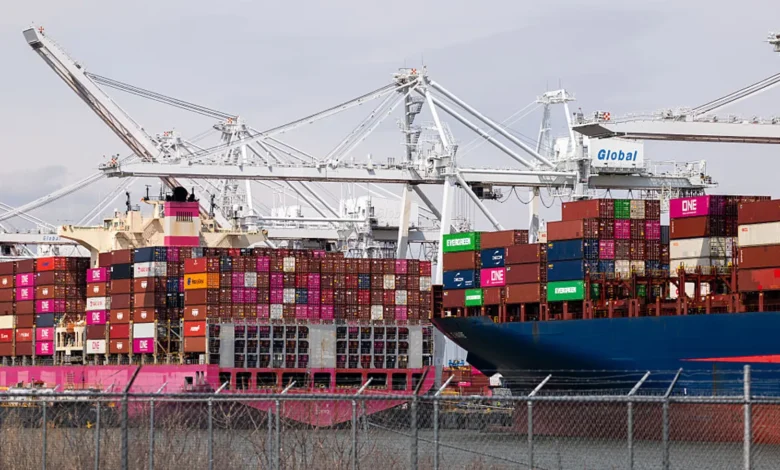
As the global supply chain navigates the final weeks of the traditional peak shipping season, the transpacific trade lanes are showing signs of cooling after months of historic volatility. According to the latest data from the Freightos Baltic Index, spot rates for a forty-foot equivalent unit (FEU) from Asia to the U.S. West Coast reached $7,569 as of September 8, while rates to the U.S. East Coast sat at $9,505. While these figures remain significantly elevated compared to historical averages, the downward trajectory suggests that the extreme pricing pressure observed throughout the summer may finally be plateauing.
The Peak Season Context
The 2021 peak season has been defined by unprecedented demand, driven largely by a shift in consumer behavior toward goods over services and a sustained effort by retailers to restock depleted inventories. From early May through late July, the combination of high import volumes and constrained capacity created a perfect storm for ocean carriers, pushing spot rates to record levels. However, as the industry moves toward the final quarter of the year, analysts suggest that the likelihood of further significant rate hikes is diminishing.
This stabilization is not necessarily a reflection of easing demand, but rather a maturation of the market’s response to persistent bottlenecks. With carriers having already deployed all available capacity, the market has reached a functional ceiling. The cooling trend indicates that the extreme urgency that fueled mid-summer price surges is beginning to subside, even as the logistical challenges on the ground remain acute.
Chronology of Disruption: The Typhoon Impact
While demand dynamics have stabilized, the physical movement of goods remains hindered by environmental factors. Since mid-July, a series of powerful typhoons has swept through the Asia-Pacific region, creating a cascading effect of delays that have hampered port efficiency across China and South Korea.
The impact of these weather events has been profound. According to a September 4 update from logistics provider Kuehne + Nagel, Typhoon Saudel served as a catalyst for severe operational bottlenecks at major Chinese gateways. The port of Ningbo, one of the world’s busiest, was forced to cease operations for 78 hours leading up to September 3. Simultaneously, Shanghai faced extreme congestion, with approximately 42 vessels at berth and an additional 99 vessels waiting at anchorage.
The disruption was not limited to individual ports but acted as a ripple effect throughout the regional maritime network. Freightos reported that the storm systems were robust enough to impact operations as far north as the port of Busan in South Korea, and there were growing concerns regarding potential interruptions to the ports of Shenzhen and Hong Kong.
By the end of August, the backlog created by these weather-related shutdowns had reached a critical mass. Because many ports were unable to clear their container queues before subsequent storms arrived, the regional infrastructure entered a state of gridlock. In response, several major ocean carriers made the strategic decision to skip scheduled calls at heavily congested ports. While this move helped maintain vessel schedules on a macro level, it forced a surge in transshipment volumes at alternative ports, effectively shifting the congestion from one location to another rather than resolving it.
Data Breakdown and Market Analysis
The financial implications for importers are significant. At $7,569 per FEU to the West Coast and $9,505 to the East Coast, companies are paying a premium that has fundamentally altered their profit margins and retail pricing strategies.
To put these numbers into historical context, prepandemic rates for the same routes were often less than a quarter of current prices. The current "stability" being observed is a relative term; while rates are not rising as sharply as they were in June and July, they remain at levels that represent a major fiscal burden for mid-sized retailers and manufacturing firms.
Analysts point to several factors that have sustained these elevated levels:
- Vessel Utilization: Carriers have maintained high vessel utilization rates, ensuring that supply remains just tight enough to prevent a rapid collapse in pricing.
- Inventory Replenishment: Despite the costs, retailers continue to prioritize inventory availability over freight cost optimization, fearing another round of supply chain shortages during the holiday season.
- Equipment Shortages: The uneven distribution of empty containers remains a primary friction point. Even when space is available, the lack of containers in the right locations continues to delay the export process in Asia.
Official Perspectives and Industry Response
Industry bodies and logistics providers have consistently advised their clients to anticipate continued volatility through the remainder of the year. The primary concern among shippers is not just the price, but the reliability of the "estimated time of arrival."
In statements regarding the port congestion, logistics firms have noted that the "skipping" of port calls—often referred to as "blank sailings" or "port omissions"—is a defensive measure taken by carriers to recover schedule integrity. However, for the shipper, this leads to significant uncertainty. When a vessel bypasses a port, the cargo must be re-booked or shifted to the next available sailing, which creates a secondary wave of congestion at transshipment hubs.
Kuehne + Nagel’s analysis underscores the necessity for supply chain managers to implement more agile planning. By monitoring real-time port data, companies are attempting to reroute shipments to less congested secondary ports, although these facilities are quickly reaching their own limits, often lacking the rail or trucking capacity to handle the diverted volume.
Broader Implications for Global Trade
The current situation serves as a stark reminder of the vulnerability of "just-in-time" supply chains to natural disasters. While the industry has made strides in digitalizing tracking and communication, the physical reality of a port closure remains a blunt instrument that can derail months of planning.
Looking toward the remainder of 2021, the focus is shifting from "peak season" to "post-peak resiliency." Many companies are re-evaluating their reliance on singular maritime routes. There is an increasing trend toward diversifying entry points into North America—for instance, increasing volumes into Gulf Coast or East Coast ports to avoid the extreme congestion currently plaguing the Southern California complex.
Furthermore, the environmental aspect of these disruptions is gaining attention. As climate change increases the frequency and intensity of typhoons in the Pacific, logistics providers are beginning to factor climate risk into their long-term infrastructure investments. The ability of a port to recover from a 78-hour shutdown is no longer just an operational hurdle; it is a competitive advantage in an increasingly unpredictable global environment.
Conclusion: A New Baseline?
As the market moves into the later stages of the year, the stability of freight rates at their current high levels suggests a "new normal." While the market is no longer seeing the frenzied, exponential growth of the summer months, the underlying constraints—port congestion, equipment shortages, and the unpredictable nature of global weather patterns—remain firmly in place.
For stakeholders in the transpacific trade, the strategy has shifted from waiting for a return to pre-2020 pricing to managing the current high-cost environment through better inventory management and enhanced visibility. The coming months will likely see carriers focusing on clearing the backlog of delayed cargo, which may provide some relief to port efficiency, even if the price of space on vessels remains firmly elevated. The resilience of the global trade network will continue to be tested, not just by the volume of goods, but by its capacity to weather the storms, both literal and metaphorical, that define modern logistics.